Weekly · Daily New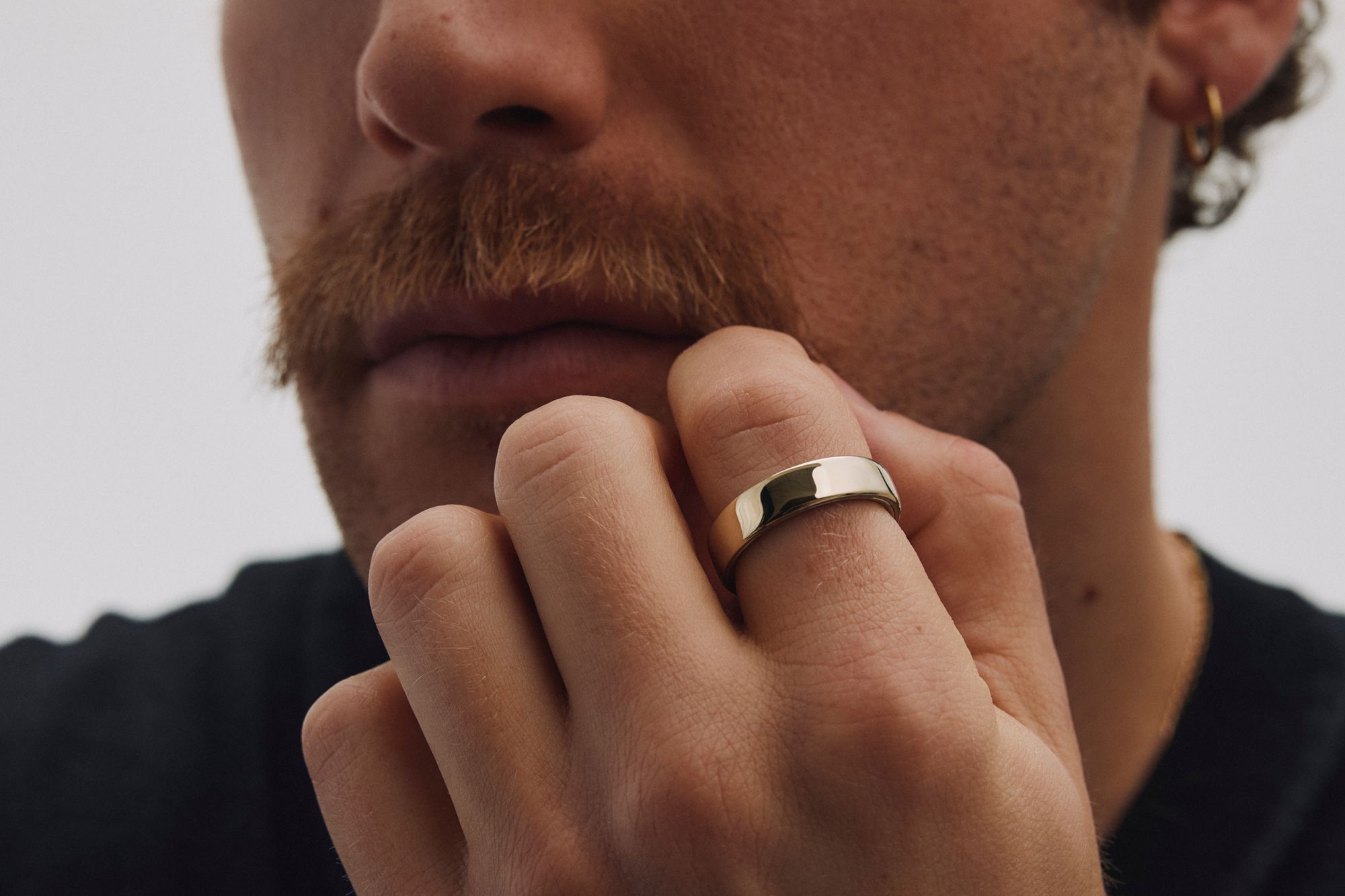
W e check in every morning and every night; very often it is one of the first and last things I do each day. Its findings can quicken my step or darken my mood. I am – I must admit – one of a growing number of people whose health is tracked in minute detail by wearable technology .
Oura , the maker of the smart ring that I consult numerous times each day , is about to go public in a listing that could value it at up to $15bn . It is part of a broader trend towards health and wellness that has been sweeping the technology industry since Covid – from Apple to the makers of smart mattresses. But that ever-increasing presence of health tech in our lives has led to both positive and negative impacts.
Positive because it represents a new concern for our wellbeing, and new powers to maximise our health. Negative because that concern could lead to exactly the kind of unhealthy behaviours that it aims to protect us from. Ring fit for a prince: Prince Harry wearing an Oura Health fitness tracker on South Melbourne Beach in 2018 (Getty) The concern is legitimate.
Most people probably know someone for whom their health tracking seems at best to be a replacement for another unhealthy behaviour, and at worst a kind of addiction that makes them more unwell than if they had never started. The caricature goes like this: people get into health tracking because they want to show off just how healthy they are. And that leads them down a dangerous path that ends in a kind of obsessive, addicted optimisation, causing them unnecessary and unhelpful worry – as well as keeping them from doing the things that might really be good for them.
But those concerns are undermining the reputation of a technology that can be transformative for our health, as it has been for mine. For me, tech like Oura helps to spot the more long-term trends that the imminent and unavoidable short-term nature of daily life means you might otherwise miss. Every so often it will check in to let me know that I’ve been getting less sleep than usual , for example – and I’ll realise that, yes, it was right, and what I thought was a mysterious and unexplained crash in my mood was actually the result of doing too much and resting too little, or vice versa.
Unlike some other health tech, Oura is specifically designed to get out of the way. It starts with the design: it is small and easy to forget, and has no screen (although you do have to check your phone to see the results). The data itself focuses on long-term wellness trends rather than immediate feedback.
It differs in this respect from other health trackers such as those made by Garmin and Apple, which are more focused on understanding your exercise and optimising that. There is, of course, a danger in over-relying on this stuff. Sometimes, people refer to it as an addiction, although that’s never been quite the case for me.
But there can be an over-reliance, where the measurement becomes more important than the thing being measured – for instance, your sleep score becomes more important than the sleep itself. That seemed to be the recognition behind the scorn poured on Steven Bartlett when earlier this year he complained that he drank wine and it had “ ruined his life ” for the three days that followed. “I had a couple of glasses of wine, didn’t get drunk,” he said, and went on to explain that it had altered his appetite, made his podcasting worse and meant he failed to go to the gym.
Steven Bartlett is arguably a figurehead of the optimisation movement – keeping tabs on health through readings and gadgets (Steven/Instagram) But that didn’t seem to be the real controversy. “I could track all this on my Whoop ,” he says, looking at the camera, before making a joke about being a “hashtag sponsor”. But of course he’d already said he felt worse; the really galling thing about his comments to many seemed to be that it was the numbers that mattered, not what they reflected.
I will be the last person to defend Bartlett , and the life-optimising, spirit-denying movement of which he’s a figurehead, but he didn’t actually say that in the podcast. You can say what you like about him – I’d be happy to hear it – but he’s not wrong that small bad decisions can quickly become bigger and worse ones without you noticing. The deeper problem was the fact that his comments reflected a kind of fragility.
For all that optimisation culture talks about resilience and grit, a lot of the wellness tech that it relies on (and promotes) very often forces people into strict routines and a limited view of life. If you’re hardy, tough life relies on limitations and denial, then it is not actually resilient at all. Likewise, if you rely on health tech like Oura to score that hardy and tough life for you, then it will always fail.
Yes, a late night might derail your sleep score for a day or two; it might also be in those same late hours that you forge a lifelong connection, crack a problem that has been troubling you, or simply have some much-needed fun. None of those things feeds into any wellness or recovery score. This too, I suspect, is what also perturbs people so much about Bryan Johnson, the tech entrepreneur who has funnelled his money into a longevity project he has referred to as “don’t die”.
The guiding principle of all this is his wide-ranging protocol; his clear ultimate goal is to build an algorithm that would account for every part of his wellbeing and simply tell him at every moment what to do. He wants an Oura ring for our entire lives. But an Oura ring won’t capture our entire lives.
It’s a band of metal with some sensors in it; it can’t represent everything, and it doesn’t really seem to want to. This kind of health technology is best understood not as some progress towards the ultimate goal of a life full of health and free of choice, but one guide that can help us be a little more well. It is – or should be – about advice, not rules.
The word “health” has picked up something of a tired reputation in this era of much more exciting words, like optimisation and wellness. But that’s all it is really about: a healthy relationship with our health, and the health tech we use to track it.
Source: The Independent